Walk the blocks around West Sanford Street and Pirie Park and you’ll see what central Arlington does best: solid brick ranch homes from the 1950s, 60s and 70s on slab foundations, many still wearing their original plumbing. That plumbing is often galvanized steel, and it has a shelf life. If you’re planning a home improvement project in one of these houses, the pipes behind the walls deserve a decision before the new tile goes in.
- Key Takeaways
- How can you tell if your Arlington home still has galvanized pipes?
- Why do galvanized lines fail faster in North Texas homes?
- Which material should replace galvanized steel: copper, PEX or CPVC?
- Does replacing galvanized pipes in Arlington need a permit?
- What does a repipe look like during a remodel?
- Should you replace every pipe or only the remodeled section?
- What homeowners near Pirie Park usually run into
- Ready to Upgrade Your Older Arlington Home?
- FAQ
- Home Improvement help near Arlington
Key Takeaways
- Galvanized pipes corrode from the inside: rust narrows the pipe and starves fixtures of flow long before a visible leak shows up.
- The EPA notes that corrosion of older household plumbing is one way metals can end up in tap water, so this is a health question too.
- Remodels open the walls anyway: replacing lines while the drywall is already out saves a second round of demolition and patching.
- Slab homes usually get rerouted overhead: in much of Arlington, new PEX or copper runs through the attic instead of under the concrete.
- A repipe is permitted work: in Arlington it goes through the city with inspections, and your contractor handles the paperwork.
How can you tell if your Arlington home still has galvanized pipes?
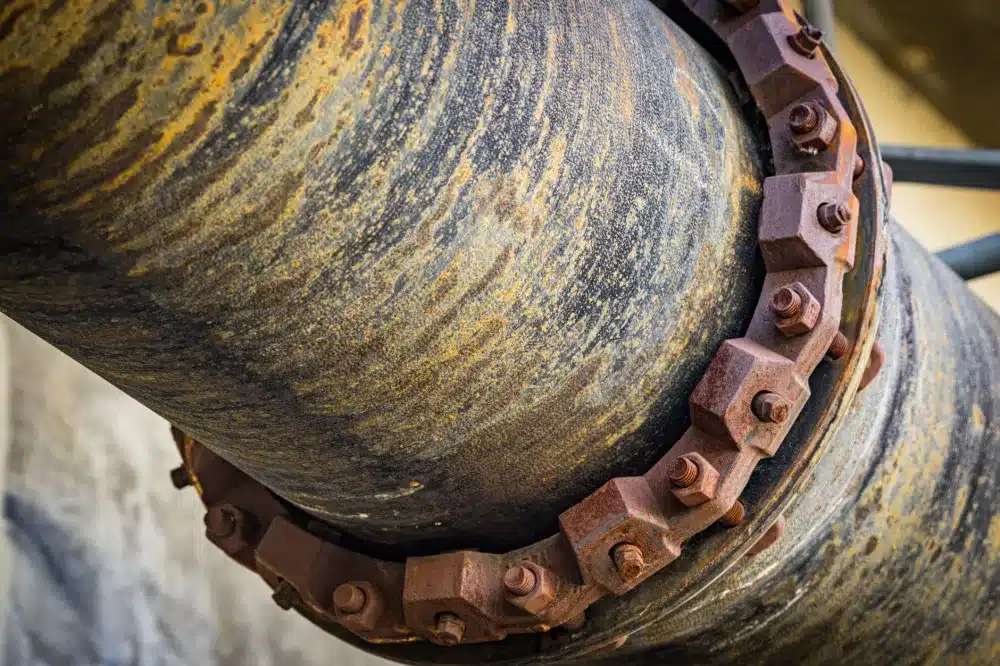
The quickest check is the exposed pipe at your water heater or under a sink: galvanized steel is dull gray, threaded at the joints, and a magnet sticks to it. Copper is reddish and smooth, and PEX is flexible plastic tubing, usually red, blue or white.
Many homes in this part of Arlington, especially the ranch houses between West Sanford Street and Ross Trail built before the mid 1970s, started life with galvanized supply lines. Some were partly updated over the decades, so it’s common to find copper near the water heater and old steel still feeding the far bathroom.
Symptoms tell the rest of the story. Brownish water first thing in the morning, weak pressure at the shower when someone runs the kitchen tap, and crusty threads on the pipe are all signs the zinc coating has given up and the steel underneath is rusting.
Why do galvanized lines fail faster in North Texas homes?
Heat, water chemistry and the way these houses were built all work against old steel pipe. Hot water speeds up corrosion, and a water heater in a baking Texas attic or garage keeps that side of the system working hard for decades.
Many homes in this part of Arlington sit on slab foundations poured over expansive clay. That clay swells in wet winters and shrinks in August, and the slab moves a little with it. Supply lines run under or through the slab take that stress at the threaded joints, which are the weakest point of a galvanized system. A slow leak under the concrete can run for months before anyone notices a warm spot on the floor or a water bill that doesn’t add up.
Then there’s the mineral content. Much of the region’s water runs hard, and the rough, rusted interior of an old steel pipe gives scale plenty to grab onto. A pipe that was three quarters of an inch wide when the house was built may now pass water through an opening closer to a pencil.
Older homes near O.S. Gray Natural Area often have cast iron drain lines too. They’re a separate system, but they age on a similar clock, and a remodel is a good moment to have both looked at.

Which material should replace galvanized steel: copper, PEX or CPVC?
For most Arlington repipes done during a remodel, PEX is the usual choice, with copper a close second where the homeowner prefers metal. CPVC still gets used, but less often for whole-house work.
PEX (cross-linked polyethylene, the flexible colored tubing) bends around corners, needs far fewer joints, and tolerates the freezes that catch North Texas off guard every few winters. Copper has the longest track record and handles heat well, but every joint is soldered, and in some water it can develop pinhole leaks. CPVC is rigid plastic that installs simply but gets brittle with age.
Those lifespans are general ranges from manufacturers and trade groups, not promises for your house. Water chemistry, installation quality and how hot your water runs all move the number. A good home improvement service in Arlington will walk you through the trade-offs in your own utility room rather than hand you a one-size answer.

Does replacing galvanized pipes in Arlington need a permit?
In general, yes. A whole-house or partial repipe is plumbing work, and in Arlington that kind of work is permitted and inspected through the City of Arlington.
That’s a good thing for you. An inspector checks that the new lines are supported, protected where they pass through framing, and pressure tested before the walls close up. Your contractor pulls the permit, schedules the inspections and meets the inspector on site, so your part is mostly letting them in. Requirements vary by city and change over time, so treat this as the general picture and let the crew confirm the specifics for your address.
Permits come up for most remodeling in Arlington anyway, so folding a repipe into a kitchen or bath project usually means one coordinated set of inspections instead of two.
What does a repipe look like during a remodel?
Most repipes in these homes take a few working days, with the water off for only part of one of them. Here’s the typical sequence inside a larger home improvement project.
Planned early, the plumbing never holds up the tile setter or the cabinet installer.
Replacing Old Pipes During Your Arlington Remodel?
If the walls are coming open anyway, let us check the galvanized lines first. We handle the plumbing, permits and finish work together for homes around Pirie Park and West Sanford Street.
Should you replace every pipe or only the remodeled section?
If the house still has galvanized steel throughout, replacing all of it at once is usually the better long-term call. Partial replacement makes sense when most of the home has already been updated and only one branch remains.
The reasoning is simple. New fixtures fed by sixty-year-old steel still have a weak link. Low flow at the shower, rust flakes clogging a new faucet cartridge, and the next leak somewhere you didn’t open up are common outcomes of a half-done job.
That said, budgets are real. A fair middle path is to replace everything reachable through the remodel area and the attic, which in many of these one-story ranch homes covers most of the system, and schedule the last branch for later.
If the project is a bathroom remodel in Arlington or a kitchen update, ask the crew to mark on a simple sketch which lines are new and which remain. Keep it with your house papers.
Tired of Rusty Water and Weak Showers in Arlington?
A whole-house repipe folded into your kitchen or bath project solves both at once. Our home improvement crew walks you through PEX versus copper right in your own utility room.
What homeowners near Pirie Park usually run into
Shutoff valves that don’t shut off. The original gate valves at the main and under the sinks are often seized or only partly close, so the first real job is getting reliable control of the water. Experienced crews plan for that rather than discovering it with a wrench in hand.
Hidden mixed-metal repairs. Over sixty years, several owners and handymen have touched these systems. It’s common to open a wall and find a copper patch, a brass fitting and a length of galvanized within a few feet, each junction a little rusty. Those sections get removed rather than reused.
Plaster and older wallboard. Homes from the 1950s and early 60s around Masonic Home and West Sanford Street sometimes have plaster over gypsum lath rather than modern drywall, and it patches differently and takes more finishing time. A fair estimate accounts for the patching, texture matching and paint, not just the pipe.
Water heaters near the end of their life. Years of rust and scale from galvanized lines settle at the bottom of the tank, and many homeowners find the heater was the next thing due anyway. Decide that before the new lines are tied in, not after.
Ready to Upgrade Your Older Arlington Home?
If your house near Pirie Park or along Ross Trail still runs on galvanized steel, the remodel you’re already planning is the right moment to deal with it. Southern Home Remodeling is owner-run, led by Cristian Quimbayo, who has been building across DFW since 2011, with project manager John Tavera and more than 40 years of combined experience in construction and construction lending on the team. You can read more about Cristian and how the company works before you pick up the phone.
Our office at 1611 W Sanford St is right here in this part of Arlington, less than a kilometer from these homes, so the walkthrough is a short trip for us. We’re open Monday to Saturday, 8AM to 6PM, and the in-home estimate is free. We’ll check the exposed pipe, test flow at the fixtures, and give you a written plan that covers the plumbing alongside your Arlington home improvement service work.
Book Your Free Home Improvement Estimate in Arlington
Our office on West Sanford Street is minutes from your door. We will test flow at your fixtures, look at the exposed pipe and write up a plan that fits the rest of your remodel.
Not in central Arlington? Our areas we serve page covers the rest of Tarrant County, from Pantego and Dalworthington Gardens to Grand Prairie.
FAQ
Home Improvement help near Arlington
Southern Home Remodeling works throughout Arlington, including the Arlington area around West Sanford Street and Masonic Home, near Pirie Park and O.S. Gray Natural Area. Projects in 76012 are permitted and inspected through the City of Arlington, and our team handles that paperwork as part of the job.
Our office at 1611 W Sanford St, Arlington, TX 76012 is about 0 miles from Arlington, so an in-home estimate is easy to schedule. Call 817-330-9499 or use the estimate button below.
Service page for this area: Home Improvement in Arlington. City guide: home remodeling in Arlington.
Keep exploring
- Home Improvement in Arlington, TX
- Bathroom Remodeling in Arlington, TX
- Kitchen Remodeling in Arlington, TX