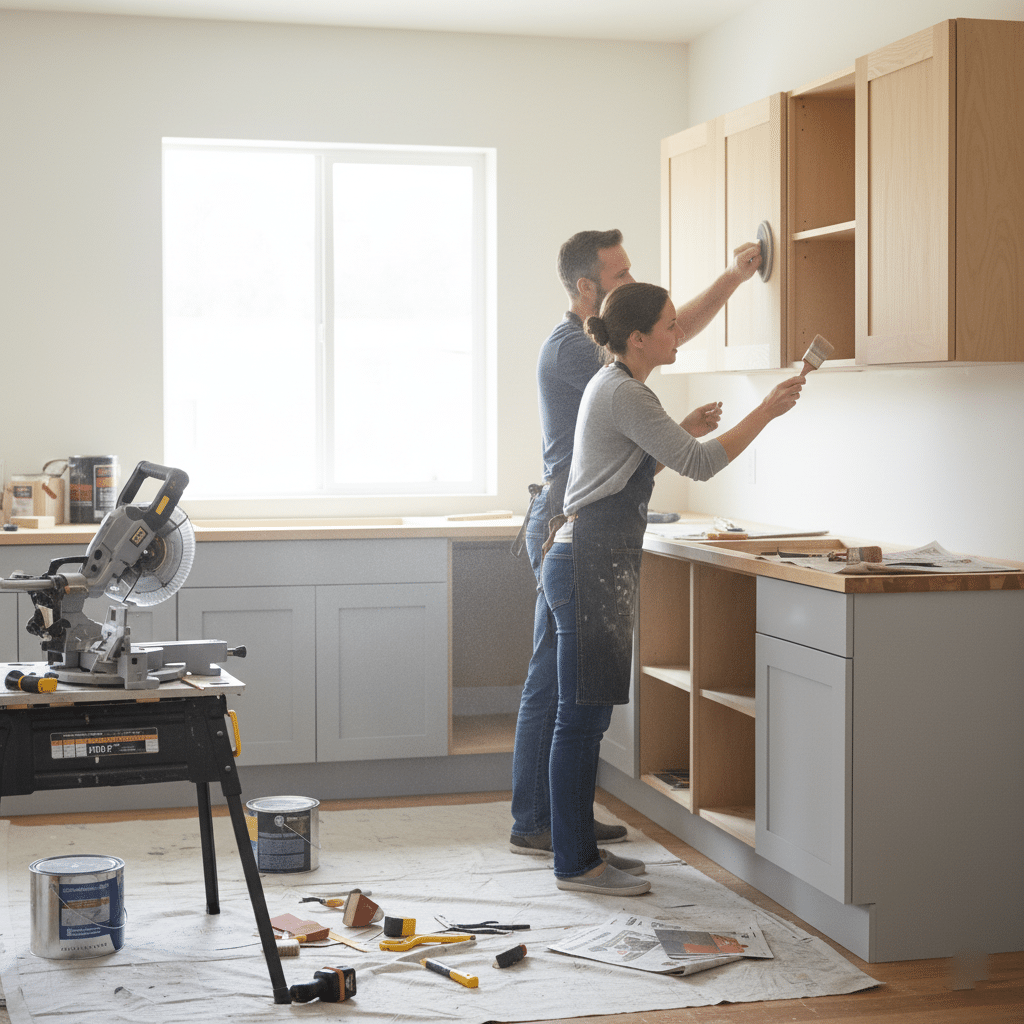
Many homeowners feel stuck in a binary choice: live with a kitchen that feels dated and dingy, or spend their life savings on a total demolition. However, there is a sophisticated middle ground that industry veterans like Southern Home Remodeling often champion. You don’t have to tear out the drywall to get a “new” kitchen. By focusing your kitchen remodel specifically on the cabinetry, you can transform the most visible part of your home while keeping your budget and sanity intact.
The Philosophy of the Surgical Kitchen Remodel
A “surgical” kitchen remodel is about precision. It’s the idea that you can change the entire aesthetic of a room by only touching the elements that are visually or functionally exhausted. When you keep your existing cabinet “carcasses,” the sturdy boxes that make up the structure bypass the most expensive and disruptive parts of home improvement.
Why Your Existing Layout is Your Greatest Asset
Most people don’t actually hate their kitchen layout; they hate the way it looks. If the triangle formed by your stove, sink, and refrigerator works for your cooking style, moving it is an unnecessary expense. By retaining the footprint, you avoid the “domino effect” of renovation: moving a cabinet often means replacing the flooring, which means moving the plumbing, which means rewiring the electrical.
The Cost-Benefit Analysis of Keeping Cabinet Boxes
From a financial perspective, cabinet boxes account for a massive portion of a renovation budget. If your boxes are made of ¾-inch plywood or solid wood, they are likely sturdier than the mass-produced units found in big-box stores today. Keeping them allows you to reallocate your funds toward high-end finishes, premium hardware, or perhaps that professional-grade range you’ve always wanted.
Evaluating Your Cabinetry: Is Your Kitchen a Candidate?
Before you commit to a cabinet-centric kitchen remodel in Arlington, you need to be honest about the health of your wood. Not every cabinet is a hero waiting to be rescued. Some are simply past their prime. At Southern Home Remodeling, we suggest a “stress test” before starting any project.
Identifying Structural Integrity vs. Cosmetic Fatigue
Cosmetic fatigue is easy to spot: chipped paint, worn edges, or a 1970s orange-oak stain. These are all surface-level problems. Structural integrity, however, is about the “bones.” Check the corners of your cabinet boxes. Are they still square? Do the shelves sag under the weight of your plates? If the box is rigid and flush against the wall, it is a perfect candidate for a refresh.
The Water Damage Walkthrough
The silent killer of a kitchen remodel is moisture. Check the cabinets under your sink and near the dishwasher. If you see swelling in the wood, dark mold spots, or a “spongy” texture when you press on the base, that specific unit may need replacement. You can often replace one or two damaged boxes while keeping the rest, but you must address the structural rot before applying a new finish.
Method 1: The Deep Dive into Professional Refinishing
Refinishing is the most common path for a budget-conscious but high-impact kitchen remodel. This process involves keeping your original doors and boxes while entirely changing the wood’s color and texture.
The Science of Surface Preparation: Degreasing and Sanding
You cannot simply paint over old kitchen cabinets and expect them to last. Kitchens are high-grease environments. Over the years, a microscopic film of cooking oils and steam builds up on the wood. A professional-grade refinish starts with an industrial degreaser (like TSP) to strip the wood bare. This is followed by mechanical sanding to create a “profile” of tiny ridges that allow the new coating to grip the surface.
Why Bonding Primers Are Non-Negotiable
Standard wall primer will not stick to kitchen cabinets. You need a specialized bonding primer, as she has, that’s coil-based and can bite into the wood and block tannins from bleeding through. This is especially important if you are painting dark wood (like cherry or mahogany) a light color, such as white or cream.
Choosing Your Finish: Paint vs. Stain
While paint offers a clean, modern look, staining allows the wood’s natural character to shine through. If you have beautiful grain patterns, a “translucent” stain can shift the tone from an old-fashioned honey color to a modern, sophisticated espresso or weathered oak. Paint, however, remains the king of the kitchen remodel for its ability to hide dated wood species like oak completely.
Method 2: Cabinet Refacing for a Total Style Shift
If you despise your door style, perhaps you have those dated “cathedral” arches. Refinishing won’t solve your problem. This is where refacing becomes the hero of your kitchen remodel.
Selecting New Doors and Drawer Fronts
Refacing is essentially a “facelift.” You keep the boxes but replace every door and drawer front with brand-new, modern-style ones. Shaker-style doors are currently the gold standard for versatility, fitting into both farmhouse and ultra-modern designs. By changing the door style, you alter the room’s architectural language.
The Art of Applying Veneers and Skins
To make the old boxes match the new doors, a thin veneer or “skin” of matching wood or laminate is applied to the face frames. This requires a steady hand and high-strength adhesives. When executed by a team like Southern Home Remodeling, the transition is seamless. No one will know that the “insides” of your cabinets are twenty years older than the “outsides.”
Method 3: Hardware and “Jewelry” Upgrades
Never underestimate the power of hardware. In any kitchen remodel, the knobs and pulls are the finishing touch that ties everything together.
Modernizing with Pulls, Knobs, and Hinges
If you are currently using external, polished-brass hinges, your kitchen will always look dated, no matter how much you paint it. Switching to hidden, European-style hinges “cleans up” the look. Furthermore, replacing small, dainty knobs with substantial, oversized pulls (in finishes like matte black, champagne bronze, or brushed nickel) adds an immediate sense of luxury and custom design.
Enhancing Functionality with Internal Retrofits
A kitchen remodel shouldn’t just be about looks; it should be about how your kitchen serves you. While the doors are off for refinishing or refacing, it is the perfect time to upgrade the interior functionality.
Transitioning to Soft-Close and Pull-Out Systems
Do you have a “blind corner” cabinet where pots go to disappear? You can retrofit these with “Lazy Susans” or pull-out kitchen shelves. Likewise, upgrading your drawer glides to soft-close versions, the kind that pull the drawer shut silently for the last two inches, is a high-end feature that makes your old kitchen feel brand new every time you use it.
The Role of Lighting in a Cabinet-Centric Remodel
To truly showcase your new cabinet finish, you must address the lighting. Most older kitchens suffer from “shadow zones” under the upper cabinets. Installing LED tape lighting is an inexpensive addition to a kitchen remodel that provides essential task lighting for cooking and a beautiful ambient glow for evening entertaining.
Budgeting and Timeline Management
The most significant benefit of avoiding a “full” remodel is the speed. A complete kitchen replacement can take 8 to 12 weeks. A cabinet-centric kitchen remodel with Southern Home Remodeling typically takes 1 to 2 weeks. Budget-wise, you are looking at spending roughly 25% to 40% of what a complete replacement would cost, allowing you to achieve a high-end look without the high-end debt.
Southern Home Remodeling Serving the Webb Community and Beyond in Euless
Southern Home Remodeling is dedicated to serving the diverse needs of the Euless community, including residents of neighborhoods like Webb. Conveniently located near local landmarks such as Fish Creek Linear Park and major road crossings like Wallingford Dr and Portsmouth Dr (coordinates: Latitude: 32.656467, Longitude: -97.07898), we proudly provide high-quality kitchen remodel services tailored to homeowners in the area.
Get kitchen remodel Services at Webb now
Call Us or Contact Us
Navigate from Webb to Southern Home Remodeling Now
Conclusion
Updating your kitchen cabinets without replacing the entire footprint is the most sustainable and financially savvy way to improve your home. Whether you opt for the transformative power of professional refinishing or the stylistic overhaul of refacing, you are essentially “upcycling” your home’s potential. By focusing on the details, finish, the hardware, and the internal organization, you can create a space that feels entirely new. Your dream kitchen is already in your house; it just needs the right touch to come to the surface.
Frequently Asked Questions (FAQs)
1. Can I remodel my cabinets if they are made of laminate or Thermofoil?
Yes, but the process is different. These surfaces cannot be stained, but they can be painted if you use a high-bond primer explicitly designed for non-porous surfaces. Refacing is also an excellent option for laminate cabinets.
2. Does a kitchen remodel focused only on cabinets add resale value?
Absolutely. The kitchen is the first room buyers look at. A fresh, modern look in the kitchen can often provide a 60% to 80% return on investment, making it one of the most innovative home improvements you can make.
3. What is the most durable finish for a kitchen remodel?
For painted cabinets, a professional-grade lacquer or a waterborne alkyd enamel is best. These finishes cure to a rigid surface that resists the oils and cleaning chemicals common in kitchens.
4. How do I choose between refinishing and refacing?
If you like the shape and style of your doors but hate the color, refinish. If you hate the doors’ actual design or if they are physically damaged, refacing is the better choice.
5. How long will a refinished cabinet job last?
A professionally executed refinishing job by a team like Southern Home Remodeling can last 10 to 15 years with proper care, similar to the lifespan of a factory-finished cabinet.