Remodeling a kitchen is a monumental task that often feels like you are trying to solve a giant jigsaw puzzle while living inside it. It is the heart of the home, the place where coffee is brewed in the morning and where families gather after a long day. When you decide to undergo a kitchen remodel in Arlington, you aren’t just changing the cabinets or the floors; you are reimagining how your daily life functions.
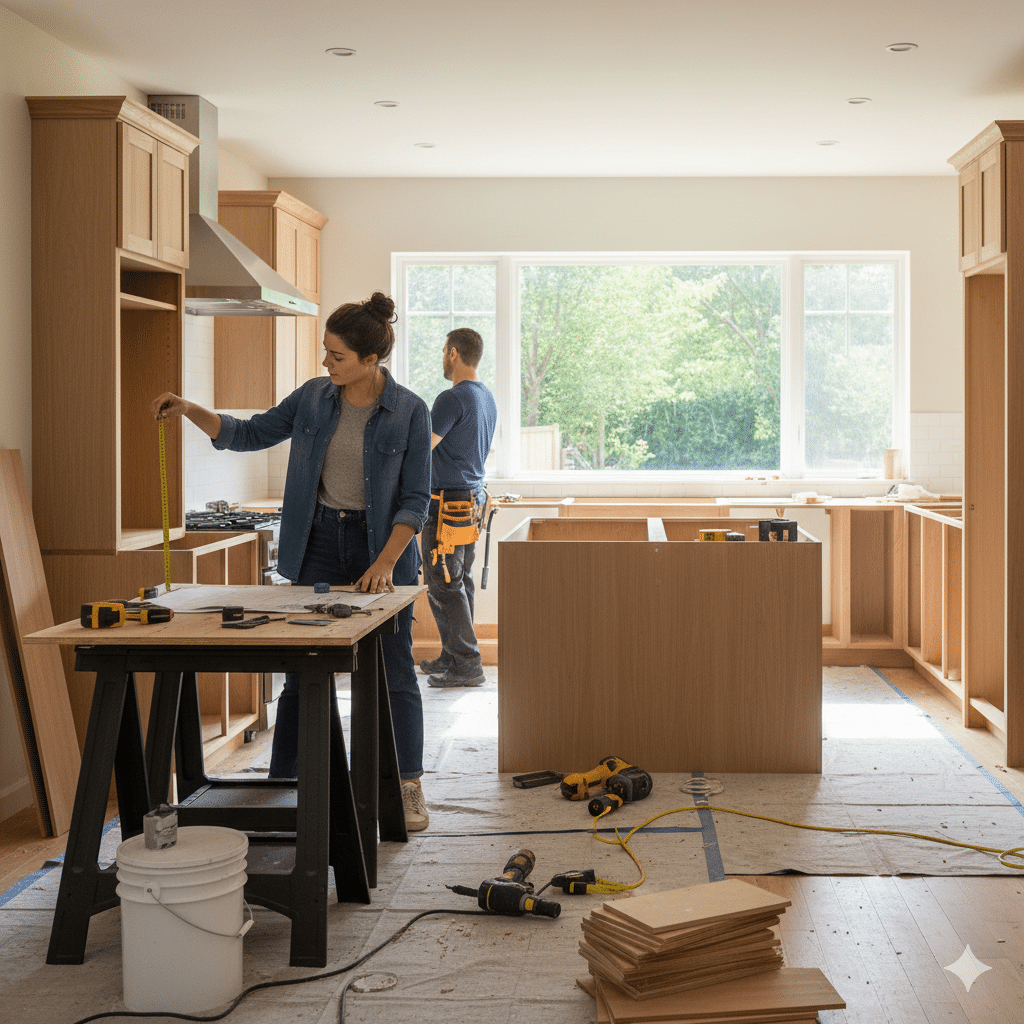
At Southern Home Remodeling, we’ve seen how a well-executed project can breathe new life into a house, but we also know that the process can feel overwhelming without a clear roadmap. The secret to a successful transformation isn’t just in the final tile choice; it’s in the sequence of events. Whether you are looking for a complete “gut” renovation or a significant aesthetic upgrade, understanding the timeline is your best defense against stress. This guide will walk you through every step of the journey, from the first spark of inspiration to the moment you cook your first meal in your brand-new space.
Initial Vision and Goal Setting
Every great project begins with a “why.” Before you even look at a swatch of paint, you need to understand the problems you are trying to solve. This initial stage is about dreaming without boundaries, but also about grounding those dreams in the reality of your daily routine. Think of this as the foundation of your home’s future happiness. If you skip this, you might end up with a kitchen that looks like a magazine cover but functions like a storage unit. Take your time here; the more specific you are now, the fewer changes (and costs) you’ll face later on.
Defining Your Kitchen Needs and Lifestyle
The most beautiful kitchen in the world is a failure if it doesn’t work for you. Start by observing your current habits. Do you host large holiday gatherings? If so, you might need a double oven or an extra-large island for seating. Are you a minimalist who hates clutter? Deep drawers and hidden appliance garages should be on your list. Think of your kitchen as an engine. In 2026, we are seeing a shift toward “multi-zone” kitchens where one person can be prepping food, another can be doing homework at the island, and a third can be grabbing a snack from the pantry without everyone bumping into each other. Identifying these needs early ensures your kitchen remodel serves your life, not the other way around.
Creating a Realistic Remodeling Budget
Let’s talk about the elephant in the room: the cost. A kitchen is arguably the most expensive room in a home to renovate because it involves so many different “trades”: plumbers, electricians, carpenters, and tilers, not to mention high-end appliances and materials. A good rule of thumb is to look at your home’s current value and aim to spend between 10% and 15% of that on the kitchen. This ensures you aren’t over-improving for your neighborhood but are still adding significant equity. Your budget should typically be divided into three main buckets: materials (cabinets, counters, flooring), labor (the pros who do the work), and a contingency fund. We always advise setting aside an extra 15% for “surprises.” When you open up walls in an older home, you never know what the previous owners left behind in terms of wonky wiring or hidden leaks.
The Professional Planning Stage
Once you have a dream and a budget, it’s time to move into the technical design phase. This is where your abstract ideas are converted into blueprints that a contractor can actually build. This stage bridges the gap between “I want a pretty kitchen” and “this is where the gas line needs to be.” Professional planning prevents the nightmare of realizing your refrigerator door can’t open all the way because it hits a new wall. It is the phase of measurement, revision, and technical validation.
Designing the Perfect Layout
The layout is the skeleton of your kitchen. If the design is bad, even the most expensive marble won’t make you happy. There are several classic shapes, U-shaped, L-shaped, and Galley, but the modern trend is often toward open-concept designs that integrate with the living area. A great layout considers the “flow” of traffic. You don’t want the main path from the garage to the living room to cut right through your cooking zone. We focus on maximizing every square inch, ensuring that storage is placed where you actually use the items, spots near the stove, and glasses near the dishwasher.
Mastering the Kitchen Work Triangle
You’ve likely heard of the “work triangle,” but why does it matter? It refers to the imaginary line connecting your three most-used areas: the stove, the sink, and the refrigerator. In an ideal setup, these three points should be close enough to be efficient but far enough apart to prevent multiple people from tripping over one another. As we move further into 2026, many designers are expanding this into “work zones,” creating dedicated areas for prep, cooking, and cleanup. This prevents the “too many cooks in the kitchen” syndrome and makes the space feel much larger than its actual footprint.
Navigating Material and Finish Choices
Now comes the fun part: picking the “jewelry” for your home. But don’t let the aesthetics distract you from durability. In 2026, we are seeing a move away from all-white kitchens toward warm wood tones like white oak and walnut, or bold colors like deep forest green. Quartz remains a favorite for its durability and low maintenance, but natural stones like quartzite are gaining ground among those who want a one-of-a-kind look. Luxury Vinyl Plank (LVP) is incredibly popular because it’s waterproof and looks exactly like wood, though many homeowners still opt for classic tile or refinished hardwoods. Every choice here should balance how you want the room to feel with how much maintenance you are willing to perform.
Selecting Your Remodeling Partner
A kitchen remodel is not a project you want to DIY unless you are an expert in multiple fields. The coordination required is immense. You aren’t just hiring a “builder”; you are hiring a conductor for an orchestra of specialists. The quality of your partner determines whether your project finishes on time or lingers for six months. You need someone who understands the local climate, the specific architectural quirks of homes in the South, and the high standards of modern engineering.
Why Expertise Matters: The Southern Home Remodeling Approach
At Southern Home Remodeling, the relationship between the homeowner and the contractor is the most critical factor in a project’s success. You need a team that doesn’t just know how to swing a hammer but knows how to manage a schedule. A professional firm handles the “heavy lifting” of logistics, ordering materials with long lead times, scheduling the plumber the moment the cabinets are set, and ensuring every inch of the work meets local building codes. Our approach is built on transparency; we want you to know exactly what is happening behind the scenes so there are no surprises on your final invoice.
The Pre-Construction Logistics
Before a single cabinet is ripped out, there is a period of quiet preparation. This is often the most frustrating part for homeowners because it feels like nothing is happening, but this “dead time” is actually when the project is won or lost. This is the stage where we triple-check measurements and confirm that the specific tile you fell in love with is actually in stock. It’s the calm before the storm, and getting it right here will make the construction phase much smoother.
Permits, Inspections, and Timelines
Depending on where you live, getting a permit for a kitchen remodel can take anywhere from a few days to several weeks. This is a non-negotiable step. Permits are your protection; they ensure that the electrical work won’t start a fire and the plumbing won’t leak into your basement. While the city is reviewing your plans, your contractor is likely ordering your cabinets and appliances. Pro tip: Never start demolition until your cabinets are confirmed and ready for delivery. There is nothing worse than having a “skeleton kitchen” for months because a shipment was delayed.
Preparation and Tear-Out
The day has finally arrived. The “dust is about to fly.” This is the point of no return, when your old kitchen is dismantled to make room for the new one. It’s a stage of high activity and physical change. While it can be stressful to see your home in disarray, a professional team will treat your house with respect, ensuring that the destruction is controlled and systematic rather than chaotic.
Demolition Day: Clearing the Path
Demolition is usually the fastest part of the process, but it’s also the messiest. A professional crew will seal off the rest of your house with plastic sheeting and use floor protection to keep the dust from migrating. During this phase, the old cabinets, countertops, flooring, and even the drywall (if you’re moving utilities) are removed. It’s a loud, high-energy phase that leaves you with a blank slate. We also use this time to carefully sort materials, donating what can be salvaged and responsibly disposing of the rest.
Rebuilding the Infrastructure
With the old kitchen gone, we enter the “rough-in” phase. This is where we work on the parts of the kitchen you will never see but will rely on every day. It’s like the skeletal and nervous system of your home. If the infrastructure isn’t perfect, the most beautiful kitchen will eventually fail. This is the time to correct any “sins” of previous builders and ensure your home meets 2026 safety standards.
Rough-In Work for Plumbing and Electric
If you’ve decided to move the sink to an island or add a pot-filler over the stove, this is when the plumber runs the new lines. Simultaneously, the electrician is pulling wires for your new lighting, outlets, and heavy-duty appliance circuits. In 2026, we are seeing a massive increase in “smart” kitchen features, Wi-Fi-enabled appliances, and voice-controlled lighting, all of which require specific wiring and setup at this stage. These mechanical updates are the most critical part of the kitchen remodel for long-term reliability.
Structural and Surface Foundations
Now that the “guts” of the kitchen are updated, it’s time to close things back up. This is the transition from a construction site back into a living space. It’s a very rewarding stage because the mess starts to disappear behind clean, flat surfaces. The room begins to take on its actual dimensions, and you can finally start to visualize where your furniture and decor will go.
Framing, Drywall, and Flooring
If walls were moved, new framing would be installed. Then comes insulation and drywall. Once the drywall is taped, mudded, and sanded, the space finally feels like a room again rather than a construction site. This is also when the flooring is typically installed. Whether you choose tile or wood, getting the floor down early allows the cabinets to sit on a level, finished surface. A solid foundation here ensures that your cabinets won’t settle or shift over the years, preventing cracked grout or sticking drawers.
The Installation Heart
This is the “milestone” everyone has been waiting for. The cabinets and counters are the defining features of your kitchen. After weeks of looking at studs and drywall, seeing the actual woodwork go up is a huge psychological boost. This is the “tipping point” of the project, where you can finally see the finish line. It’s the moment when the house starts feeling like a home again.
Setting the Cabinetry
Installing cabinets is a game of millimeters. They must be perfectly level, even if your floors and walls are not. A professional installer will use shims and lasers to ensure that the boxes are rock-solid and perfectly aligned. Once the base and upper cabinets are in, the space truly takes its final shape. At Southern Home Remodeling, we pay special attention to the “scribe” work, which fits the cabinets perfectly against the walls for a custom, built-in look that distinguishes a professional job from a DIY attempt.
Countertop Fabrication and Placement
Once the cabinets are set, the countertop fabricator comes in to “template.” They take precise measurements of the installed cabinets to create a guide for cutting the stone. About a week later, they return with the heavy slabs. Watching a massive granite or quartz slab being lowered into place is often the most satisfying moment of the entire kitchen remodel. It provides the first truly usable surface in the room and instantly elevates the whole design aesthetic.
The Visual Layer
We are now in the home stretch. This is where the aesthetic vision you created months ago finally comes to life. This phase is all about the fine details of things you will touch and see every single day. It’s where your personality shines through. While the heavy construction is over, these minor tasks require a high level of finesse and a “finishing touch” that brings the whole look together.
Backsplash, Lighting, and Hardware
The backsplash is often the last significant piece of the puzzle. It protects your walls and adds a final pop of color or texture. At the same time, the electrician returns to install the “trim” on the actual light fixtures, outlet covers, and switches. Don’t underestimate the power of hardware; the knobs and pulls you choose are the “handshake” of your kitchen, and they can completely change the feel of the cabinetry. These elements are the final layers that make the kitchen feel high-end and intentional.
Appliance Integration and Final Plumbing
The finish line is in sight. It’s time to make the kitchen functional. Without the appliances and water, the kitchen is just a pretty room. This is the day we turn the systems on and verify that everything works as intended. It’s a day of testing, double-checking, and final connections.
Bringing the Space to Life
The plumber returns to hook up the sink and dishwasher. The gas lines are connected to the range, and the refrigerator is plugged in (and the water line for the ice maker is turned on). This is the day your kitchen stops being a project and starts being a room again. Each appliance is tested to ensure everything is working perfectly. We also check for leaks one last time and ensure that the range hood is venting correctly and the dishwasher is running a complete, quiet cycle.
The Final Walkthrough and Reveal
Before we hand over the keys, there is one last step: the punch list. This is a final walkthrough in which you and your Southern Home Remodeling project manager review every detail. Is there a small scratch on a cabinet door? Does one drawer need a slight adjustment? We address these final details to ensure the finished product is flawless. Once the final cleanup is done, you are left with a space that is ready for its first home-cooked meal.
Southern Home Remodeling Serving the Euless Community and Beyond in Arlington
Southern Home Remodeling is committed to serving the diverse needs of Arlington residents, including homeowners in the Euless neighborhood. Conveniently located near popular local destinations such as South Euless Park and close to major road crossings like Dunaway Dr and McCormick Ct (coordinates: Latitude: 32.82995, Longitude: -97.07898), we proudly offer high-quality kitchen remodel services tailored to elevate your living space.
Get kitchen remodel Services at Euless now
Call Us or Contact Us Southern Home Remodeling
Navigate from Euless to Southern Home Remodeling Now
Conclusion
A kitchen remodel is a marathon, not a sprint. It requires a significant investment of time, money, and emotional energy. However, by following a structured process, moving from vision to planning, through infrastructure, and finally to the aesthetic finishes, one can navigate the complexity with confidence. When you work with a dedicated partner like Southern Home Remodeling, you aren’t just getting a new kitchen; you’re getting the peace of mind that comes from professional craftsmanship and a clear, guided journey. The result is more than just a room; it’s a renewed heart for your home that will serve you for years to come.
Frequently Asked Questions (FAQs)
1. How long does a complete kitchen remodel typically take?
Most mid- to large-scale kitchen remodels take 8 to 12 weeks of active construction. This timeline does not include the 4–8 weeks of planning, design, and material lead times that happen before demolition begins.
2. Is it possible to remodel a kitchen in stages to save money?
You can complete small cosmetic updates in stages, but a full kitchen remodel is most cost-effective when done all at once. Doing it in pieces often increases costs due to repeated mobilization of trades (plumbers, electricians) and the risk of damaging new work during later phases.
3. What is the most expensive part of a kitchen remodel?
Cabinetry is typically the most expensive component, making up 30–40% of the total remodel budget. Labor/installation costs usually follow, with appliances close behind.
4. Do I need to move out during the renovation?
Most homeowners stay in their homes throughout the remodel. We recommend setting up a temporary kitchen, often in a dining room, garage, or basement, using essentials like a microwave, a small refrigerator, and a coffee maker. It’s also an ideal time to grill or order takeout.
5. How do I know whether I need to move my plumbing or electrical?
If your kitchen layout feels inefficient, as long distances between key stations like the sink and stoverelocating plumbing or electrical lines may improve functionality. During the planning stage, a professional designer will help determine whether the benefits justify the added cost.